
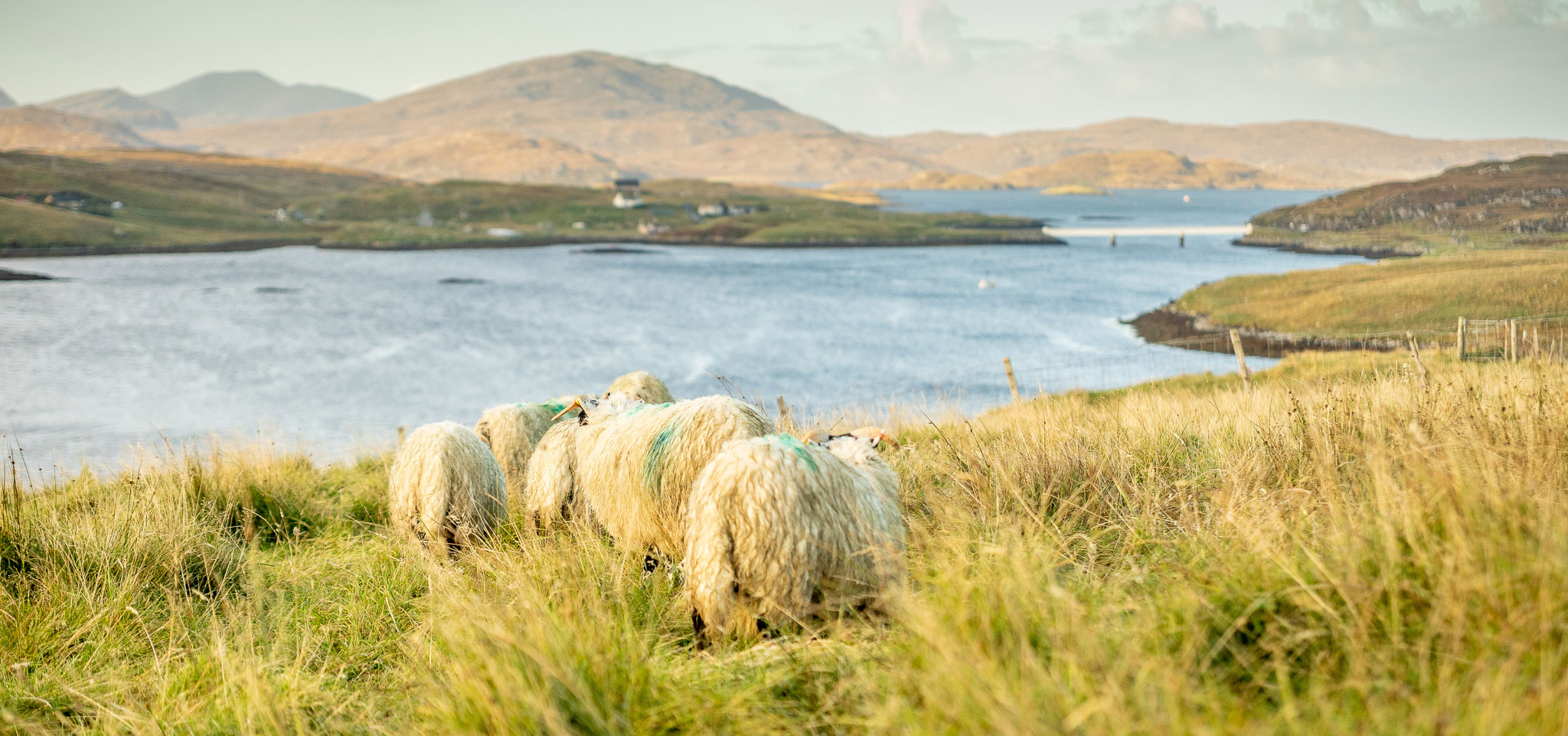

Farm
Growing food on Atlantic soil.
Low-input, seasonal, attentive. What the land will give and what it won't.
The Hebridean growing season is shorter than most gardening books account for. Spring arrives later than on the mainland — sometimes not until May, sometimes not convincingly until June. Summer, when it comes, is long in light if not always in warmth. By September, the season is closing. By October, it is gone.
This is not a complaint. It is the shape of things here. The croft runs to the rhythm of Atlantic light, and everything — what gets planted, what gets eaten, what gets preserved — follows from that. You learn quickly that the rhythms of a Hebridean croft are not the rhythms of an English allotment, and that trying to impose one on the other is a reliable way to lose half your brassicas.
We have lost half our brassicas. We have learned.
What We Grow
Vegetables are the mainstay. Kale, chard, spinach, leeks, onions, garlic. Root vegetables — carrots, parsnips, beetroot — that do well in the sandy soil close to the Atlantic. Potatoes, which feel almost mandatory on a Hebridean croft and which the soil suits better than almost anything else. Courgettes in the polytunnel when the summer is warm enough. Herbs along the sheltered south-facing wall.
The polytunnel extends the season at both ends — it's where seedlings start in March and April before the ground outside is ready, and where the last salad leaves hang on into November. It is not a luxury. On a croft this far north, it is the difference between a short season and a viable one.
What we don't grow: things that need more warmth than we can reliably provide, or inputs we don't want to buy. The approach is low-input by principle as much as by economics — buying fertility in a bag felt like missing the point of what we were trying to do. Instead: seaweed from the shore, composted waste from the kitchen and the sheep, green manures turned into the soil in autumn. The fertility of the croft comes from the croft.
The Kitchen Garden
The kitchen garden is the oldest cultivated ground on the croft — you can tell from the soil, which is darker and easier to work than the surrounding land after years of accumulated organic matter. It is where most of the vegetable growing happens: a series of raised and flat beds that follow the slope of the ground, sheltered on the north and west by the stone walls that mark the croft's boundary.
The growing beds change each year as we rotate crops and experiment with what works. What doesn't change: the attention paid to the soil. The health of the soil is the health of the garden. Everything else follows from that.
Low-Input Farming in Practice
Low-input farming is easy to say and harder to do than it sounds. It means resisting the temptation to solve problems by buying something. It means accepting that some years certain things won't work as well as you'd like, and that the answer is usually patience and observation rather than intervention.
In practice on CRØFT 22 it means:
Seaweed as fertiliser. The shore is ten minutes from the growing beds. After winter storms, wrack accumulates at the tide line. We collect it, let it break down, and incorporate it into the beds. It is free, local, and extraordinarily effective on the particular mineral-light soils of the Hebrides.
Composting everything. Kitchen waste, garden waste, spent bedding from the sheep — all of it returns to the land via the compost heap. Nothing leaves the croft as waste that could return to it as fertility.
Saving seed where we can. Not for everything — some things are simply easier to buy as seed — but for the varieties that do particularly well in our conditions. Building a seed stock that is adapted to this specific piece of ground is a long-term project. We are at the beginning of it.
Accepting losses. The Atlantic weather will win sometimes. The slugs will win sometimes. The answer is not more pesticide — it is more resilience in the planting, more variety in the crops, and a realistic relationship with what this place can and cannot do.
Seasonal Updates
This section will be updated through the growing season — check back for what's happening on the farm right now, or follow the Field Notes for regular seasonal writing.
Spring — Seed sowing begins in the polytunnel. Beds are prepared, green manures turned in, seaweed incorporated. The first signs of growth are always later than you think they should be and more welcome than you remember.
Early summer — Planting out begins when the last frosts have passed, usually late May. The kitchen garden fills up quickly. The polytunnel moves into production. The longest days mean growth happens faster than you can quite keep up with.
High summer — Harvest in earnest. The Forage shed fills up. Food boxes go out. Courgettes become a test of creativity and resolve.
Autumn — The season closes. Root vegetables are lifted and stored. The last of the outdoor crops come in before the first hard frosts. Beds are cleared, composted, and put to rest.
Winter — Planning, seed ordering, soil work. The ground rests. The croft rests. We read seed catalogues and argue about what to try next year.