

Forage
The honesty shed.
Take what you need and leave what it costs. That's the system.
Forage started as an honesty box. Eggs from the croft, left out for whoever needed them, with a tin for the money. Simple. The kind of thing that works in a place where people know each other and trust is assumed rather than earned.
When the island's shop closed in 2021, Forage became something more. The community needed somewhere to get things. Not everything — the ferry and the drive to Stornoway are not going away — but the basics, the things you run out of, the eggs and the veg and the local produce that make the gap between one shopping trip and the next manageable.
The honesty shed is now a small, permanent, properly stocked space. It runs on the same principle as the original egg box: take what you need, leave what it costs. The system works because the community here makes it work. That is not something we take for granted.
The Shed
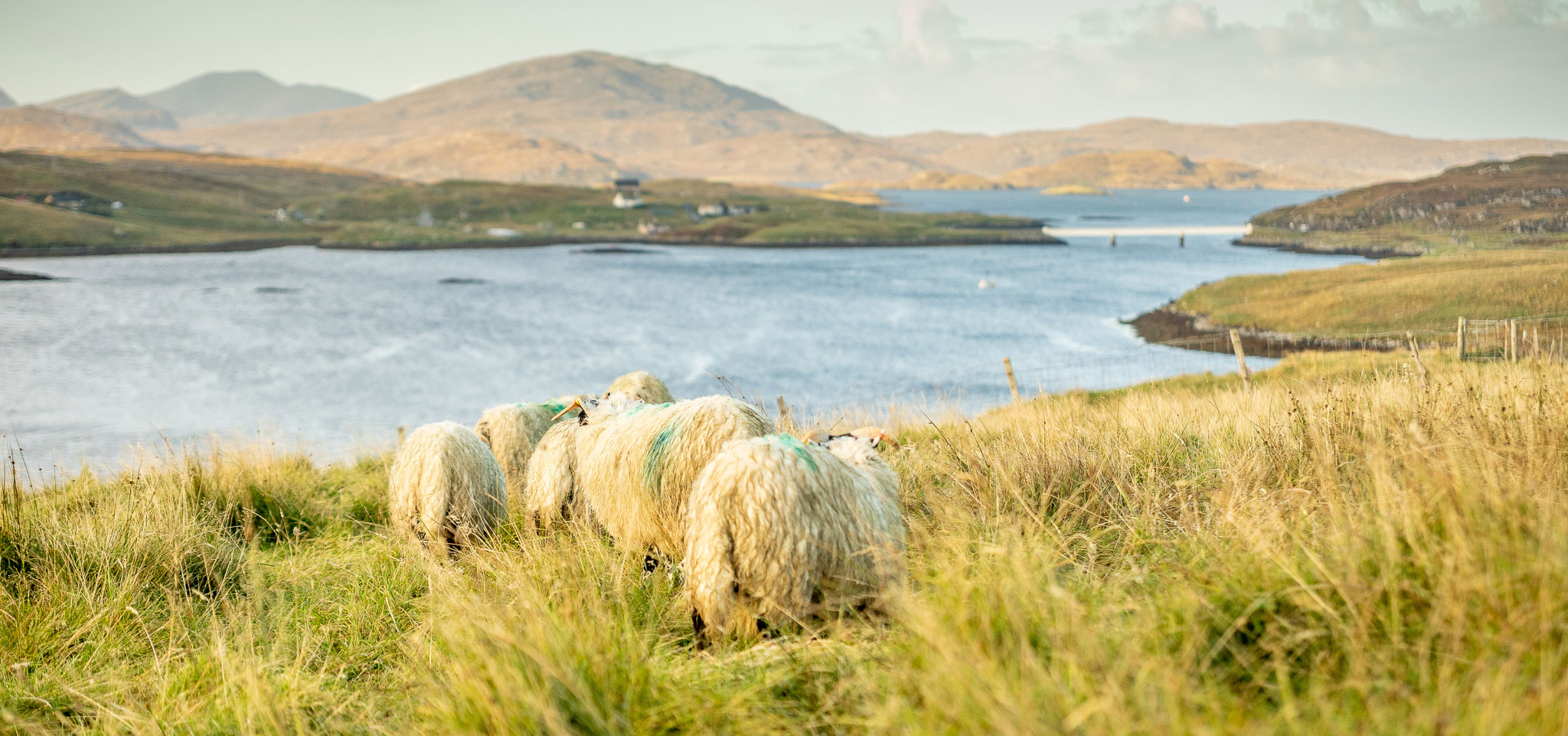
The shed itself is a character in this story. It sits at the edge of the croft, close to the road, accessible without having to come onto the land. Its shelves carry what's in season and what we've sourced from producers we know and trust — people whose practices align with what CRØFT 22 is trying to do, even if they're not on Great Bernera.
What you'll find varies with the season. In summer: fresh vegetables from the kitchen garden, eggs from the croft, soft fruit when it's ready. Through autumn and winter: stored root vegetables, preserved things, dry goods, and the produce of the producers we stock year-round. The range is not large. Everything in it is there because it is good.
If you are visiting Great Bernera, the shed is open. Help yourself and leave the money in the box.
The Food Box
The Forage food box is a weekly box of what's in season — grown on the croft or sourced from the same small network of producers who supply the shed. It is available to order and can be collected from the croft or, for some addresses on Lewis, delivered.
The box is not a subscription in the traditional sense. It follows what's available rather than a fixed formula. Some weeks it is heavy with vegetables from the kitchen garden. Other weeks, when the season is between things, it leans more on what we've preserved or sourced. It is always honest about what it contains and why.
A summer box might include
Kale, chard, courgettes, salad leaves, new potatoes, herbs, eggs, and something from one of the producers we work with — a jar of something, a loaf if we've baked, occasionally a piece of fish from someone on the island.
A winter box might include
Root vegetables — carrots, parsnips, beetroot, celeriac. Stored squash. Kale and leeks from the polytunnel. Eggs. Preserved things from the summer. Dried goods.
To order, get in touch directly: julia@croft22.co.uk or nat@croft22.co.uk. Tell us where you are and how often you'd like a box. We'll work out whether collection or delivery is the right option and what the current box looks like.
Why Forage Matters
The honesty shed is a practical thing. It fills a gap that existed when the island shop closed. It provides a local outlet for what the croft produces. It is useful.
But it is also a demonstration of something. A small-scale, community-embedded, trust-based food system is not a nostalgic fantasy — it is a functional model that exists and works on Great Bernera right now. The Forage shed is proof of concept, not aspiration.
In a wider food system context, what Forage does is small. But the principles it runs on — local production, direct relationships, honest pricing, community trust — are the principles that a more resilient food system at any scale would need to embody. We are not claiming to have solved anything. We are showing what it looks like at 18 acres, on a small island, in the Atlantic.