
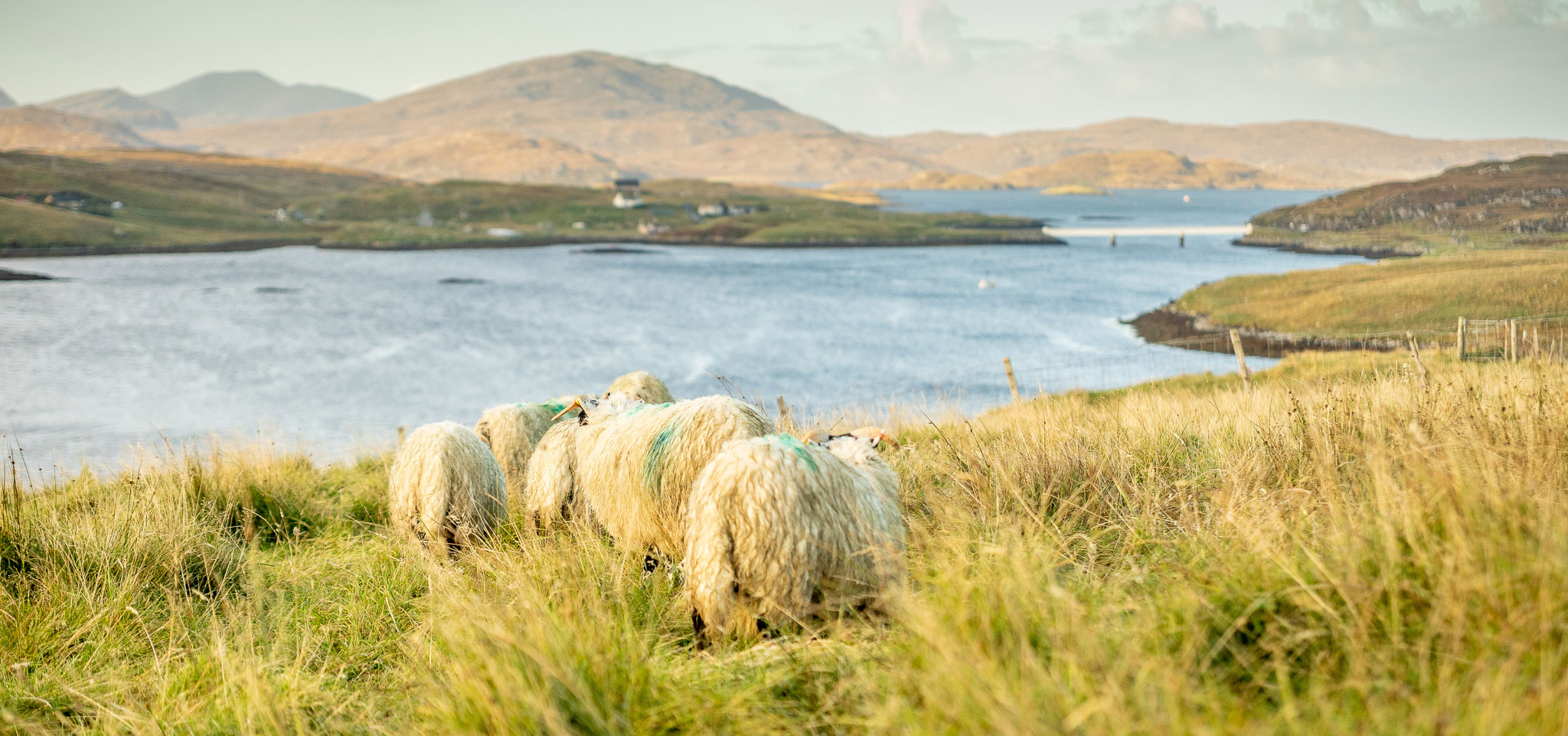

Forest
A woodland growing slowly into itself.
1,100 native trees planted since 2018. This is what happens when you give a piece of ground back to the trees.
Before the clearances — before the estates stripped the Highlands and Islands of their people and their trees in pursuit of sheep runs and grouse moors — much of Lewis was wooded. The remnants are there in the peat: ancient pine and birch preserved in the bogs, evidence of a landscape that existed before it was systematically unmade.
Planting trees on Great Bernera is not a romantic gesture. It is an attempt to restore something. The island's open moorland is beautiful, but it is partly the beauty of an absence — what you see when the trees are gone and the soil has been compressed and the species diversity that woodland supports has nowhere to live.
The forest on CRØFT 22 will not restore the pre-clearance landscape. It is eighteen acres, and eighteen acres is not a landscape. But it is something. And it is more than was here before.
The Crowdfunder
In 2018, we raised money through a community crowdfunder to plant the first trees. The response was more generous than we expected — people who had never been to Great Bernera and would probably never come contributed because the idea of planting a wood on an Atlantic island resonated with something.
That response told us something. The forest project is not just for the croft. It is for anyone who wants to know that somewhere, on a small island in the Outer Hebrides, native trees are growing that would not otherwise be there.
What We Planted
Native species only — species that belong in this landscape, not imports chosen for fast growth or commercial value.
Birch — the pioneer species, the first tree to colonise open ground given the chance. Fast-growing by woodland standards, though fast is relative. The birch planted in 2018 are now beginning to look like trees rather than saplings. Their white bark in winter light is one of the most quietly beautiful things on the croft.
Rowan — the mountain ash. Extraordinarily hardy, tolerant of the exposure and salt wind that kills less robust trees. Berries in autumn that feed the birds. Deep cultural roots in Scottish and Norse tradition — the rowan was long planted near houses as protection. We are continuing a very old practice.
Hazel — slower to establish but rewarding once it does. The hazel on the sheltered sections of the croft is now thick enough to walk into. In a few years it will be producing nuts in useful quantities.
Alder — planted on the wet ground at the lower edge of the croft. The alder fixes nitrogen from the air into the soil — it is doing work underground that doesn't show above it yet. We have learned to be patient with the alder. It knows what it is doing.
Willow — also on the wetter ground, and the fastest-growing of anything we planted. The willow has become something close to a hedge along the lower boundary without any intervention from us. It is the most exuberant thing in the forest.
Hawthorn — planted as part of the boundary hedgerows. Slow, thorny, and eventually impenetrable to almost anything. In blossom in May it is one of the most beautiful plants in the British Isles.
The Timeline
The most powerful way to understand what the forest project has achieved is to see it across time. We have kept a photographic record from the beginning: the same locations, the same camera positions, year after year.
Bare ground, open moorland, the wind unimpeded across the whole croft.
Small stakes with small trees attached, barely visible from a distance.
Something beginning to happen, if you knew where to look.
Unmistakably a young woodland on the sheltered sections.
The birch taller than a person. The willow a dense thicket. The hazel branching. The alder waiting.
The sequence is humbling in the best way. We did not do very much. We planted, we protected the young trees from deer and sheep with guards, we kept the grass back around the bases in the early years. The trees did everything else.
What the Woodland Does
The most obvious thing: it sequesters carbon. Native woodland on previously open ground is one of the most effective carbon stores available, and it builds over time rather than declining.
Less obvious but more immediately visible on the croft: shelter. The Atlantic wind is the limiting factor for almost everything grown or grazed here. The shelter belt that is beginning to establish along the western edge of the croft has already changed the microclimate of the land to its east — crops that struggled in the full exposure are now performing better, simply because the wind has somewhere to break against.
Less visible still, but arguably most important: habitat. The first year after planting, the tree guards were full of beetles and spiders seeking shelter. Warblers arrived in the hazel. A pair of stonechats — which need scrubby, mixed ground to nest in — appeared on the croft for the first time. This spring, we heard a willow warbler in the new planting. We had not heard one here before.
A wood is not just trees. It is everything that lives in and under and between the trees. We are in the early stages of that accumulation. What arrives next, we don't know. We are paying attention.
What Comes Next
More planting. The eastern boundary of the croft is still open; the plan is to extend the hedgerow planting along that edge in the next two seasons. There is also ground at the top of the croft, exposed and rough, where a small copse of rowan and birch would both provide shelter and look extraordinary against the sky.
The forest project will continue for as long as we are here. And after that, the trees will continue without us. That is the point of it.
If you contributed to the 2018 crowdfunder: thank you. The trees are growing.